All Posts (15450)

Sort by

The Paducah Gaseous Diffusion Plant in Paducah, Kentucky, is the only U.S.-owned uranium enrichment
facility in the United States.

Paducah Gaseous Diffusion Plant | usec.com  Home Page

USEC Home Page

***********************************************************************************************************

EcoWatch: Uniting the voice of the grassroots environmental movement

Countdown to Nuclear Ruin at Paducah

May 22, 2013

By Geoffrey Sea

Disaster is about to strike in western Kentucky, a full-blown nuclear catastrophe involving hundreds of tons of enriched uranium tainted with plutonium, technetium, arsenic, beryllium and a toxic chemical brew. But this nuke calamity will be no fluke. It’s been foreseen, planned, even programmed, the result of an atomic extortion game played out between the U.S. Department of Energy (DOE) and the most failed American experiment in privatization, the company that has run the Paducah plant into the poisoned ground, USEC Inc.

As now scheduled, main power to the gargantuan gaseous diffusion uranium plant at Paducah, Kentucky, will be cut at midnight on May 31, just nine days from now—cut because USEC has terminated its power contract with TVA as of that time [“USEC Ceases Buying Power,” Paducah Sun, April 19, page 1] and because DOE can’t pick up the bill.

DOE is five months away from the start of 2014 spending authority, needed to fund clean power-down at Paducah. Meanwhile, USEC’s total market capitalization has declined to about $45 million, not enough to meet minimum listing requirements for the New York Stock Exchange, pay off the company’s staggering debts or retain its operating licenses under financial capacity requirements of the Nuclear Regulatory Commission.

The Paducah plant cannot legally stay open, and it can’t safely be shut down—a lovely metaphor for the end of the Atomic Age and a perfect nightmare for the people of Kentucky.

Dirty Power-Down

If the main power to the diffusion cascade is cut as now may be unavoidable, the uranium hexafluoride gas inside thousands of miles of piping and process equipment will crystallize, creating a very costly gigantic hunk of junk as a bequest to future generations, delaying site cleanup for many decades and risking nuclear criticality problems that remain unstudied. Unlike gaseous uranium that can be flushed from pipes with relative ease, crystallized uranium may need to be chiseled out manually, adding greatly to occupational hazards.

The gaseous diffusion plant at Oak Ridge, TN, was powered-down dirty in 1985, in a safer situation because the Oak Ridge plant did not have near the level of transuranic contaminants found at Paducah. The Oak Ridge catastrophe left a poisonous site that still awaits cleanup a quarter-century later, and an echo chamber of political promises that such a stupid move would never be made again. But that was before the privatization of USEC.

Could a dirty power-down at Paducah—where recycled and reprocessed uranium contaminated with plutonium and other transuranic elements was added in massive quantities—result in “slow-cooker” critical mass formations inside the process equipment?

No one really knows.

Everybody does know that the Paducah plant is about to close. Its technology is Jurassic, requiring about ten times the energy of competing uranium enrichment methods around the world. The Paducah plant has been the largest single-meter consumer of electric power on the planet, requiring two TVA coal plants just to keep it operating, and it’s the largest single-source emitter of the very worst atmospheric gasses—chlorofluorocarbons (CFCs).

The plant narrowly escaped the selection process that shuttered its sister plants in Tennessee and Ohio long ago. A 2012 apocalypse for Paducah workers was averted only by a last-second, five-party raid on the U.S. Treasury involving four federal entities pitching together to bail out USEC financially, a deal so arcane that knowledge of Mayan astrological codices would be required to grasp its basic principles. The plot would make for a great super-crime Hollywood movie in which Kentucky’s own George Clooney and Ashley Judd could star, if only the crafting lawyers and bureaucrats had made the Code of Federal Regulations as easy to decipher as bible code, or half as interesting.

“The deal” that saved Paducah operations for a year, past one crucial election non-coincidentally, probably consumed more net energy than it produced by stupidly paying USEC to run depleted uranium waste back through the inefficient Paducah plant—like a massive government program paying citizens to drink their own pee as a way to cut sewerage costs and keep medics employed prior to a Presidential contest. The deal never would have passed muster if it had been subjected to environmental or economic reviews of any kind, but it wasn’t. The “jobs” mantra was chanted, and all applicable laws from local noise-control ordinances to the Geneva Conventions were waived.

But the deal expires on May 31, in nine days. USEC and DOE have both said that discussions for a new extension deal continue, but rumors of a new deal were dashed on May 7, sending USEC stock into a flip-flop, when in an investor conference call, the company announced that no extension had been agreed, with very pessimistic notes about even a “short-term” postponement. That accompanied news that USEC had suffered a $2 million loss in the first quarter of 2013, largely attributable to the power bill at Paducah, which USEC says it’s under no obligation to keep paying.

Showing no enthusiasm whatsoever, USEC CEO John Welch said on May 7:

“While we continue to pursue options for a short-term extension of enrichment at Paducah beyond May 31, we also continue to prepare to cease enrichment in early June.”

Meanwhile, the Kentucky DOE field office in charge, managed by William A. Murphie, has advertised a host of companies “expressing interest” in future use of the Paducah site, with no explanation of how the existing edifice of egregiousness will be made to disappear. “Off the record,” the Kentucky field office has floated dates like 2060 for the completion of Paducah cleanup.

That’s two generations from now and kind of a long time for the skilled workforce and other interested parties to hang around. Even the 2060 date assumes that costs can be minimized by evacuating the diffusion cells before power-down—the scenario that seems certain not to happen because no one has the funding for it. Flushing the cells of uranium hexafluoride gas is the only sensible way to power-down, but it’s costly and time-consuming. At the Piketon, Ohio, plant a semi-clean power-down has cost billions of dollars and has taken twelve years and counting to accomplish. (Murphie will have to explain why he paid USEC so much money for the extended power-down at Piketon, while simultaneously asserting that a Paducah power-down can be accomplished swiftly and cheaply). Clean power-down also requires that workers and supplies be available on demand, and in the Paducah case, there simply isn’t time.

According to reliable sources, contracts are being prepared for the work of placing the plant into what Murphie calls “cold storage”—a term of his invention. But those contracts won’t take effect until October when fiscal 2014 funds are available. “Cold storage” at that point means closing the doors, posting guards outside, and otherwise walking away.

Can there yet be an extension deal to hold over the plant until 2014 funds are available? Probably not, because USEC may not last that long, the equipment in the plant has been run to decrepitude with no attention to maintenance, there isn’t sufficient time to make the arrangements, and a second end-run around environmental compliance would likely generate lawsuits.

Read Full Article here

**********************************************************************************************************

USEC to Cease Enrichment at Paducah Plant

- Operations for inventory management and site transition to continue -

BETHESDA, Md.–(BUSINESS WIRE)– USEC Inc. (NYSE: USU) announced today that it had not been able to conclude a deal for the short-term extension of uranium enrichment at the Paducah Gaseous Diffusion Plant in Kentucky, and the company will begin ceasing uranium enrichment at the end of May. The Paducah plant is the only U.S.-owned and operated uranium enrichment facility in the United States. USEC leases the plant from the U.S. Department of Energy (DOE).

“While we have pursued possible opportunities for continuing enrichment, DOE has concluded that there were not sufficient benefits to the taxpayers to extend enrichment. I am extremely disappointed to say we must now begin to take steps to cease enrichment,” said Robert Van Namen, USEC senior vice president and chief operating officer.

“We will continue to meet our customers’ orders from our existing inventory, purchases from Russia under the historic Megatons to Megawatts program and our transitional supply contract with Russia that runs through 2022,” Van Namen said. “In addition, our work to commercialize the American Centrifuge technology continues through our research, development and demonstration program with DOE, which remains on schedule and within budget, as we remain on a path to deploy this critical technology.”

USEC will take steps to cease enrichment at the Paducah plant over the next month and to prepare the plant site for return to DOE. USEC expects to continue operations at the site into 2014 in order to manage inventory, continue to meet customer orders and to meet the turnover requirements of its lease with DOE.

“We will be working with DOE during the coming months and expect to reach agreement on how to best transition the site. The company and our workforce have unparalleled expertise that should be drawn on. We can provide significant value to the government in making that transition in the most cost-effective and timely manner,” Van Namen said.

USEC expects to begin reducing its workforce at the plant in the coming months. The Company will begin notifying workers as the specifics of the transition activities are defined. USEC anticipates maintaining a workforce at the site into next year to support ongoing operations, perform transition activities and meet regulatory requirements.

“We want to thank our employees and the entire Paducah community for their efforts to support continued enrichment at the plant. Although the community has known about this possibility for a number of years, we recognize that the Paducah area will soon feel the real impact of this decision and its effects on many individuals and families,” said Steve Penrod, vice president of enrichment operations.

“For 60 years, Paducah employees and the community have supported our national security and energy security. For now, at least, that mission is ending, but we are committed to working with the community and DOE for the smoothest possible transition that positions the plant site for its future role in the area’s economy.

“We want to thank members of the Kentucky delegation and our unions, the United Steel Workers and the Security, Police & Fire Protection Professionals, all of whom have worked tirelessly on behalf of the employees at this plant. We fully expect they will now recommit to helping the community create the next economic chapter for this site.”

USEC Inc., a global energy company, is a leading supplier of enriched uranium fuel for commercial nuclear power plants.

Read Full Article  Here


*********************************************************************************************************

Weapons of Mass Destruction (WMD)

PADUCAH GASEOUS DIFFUSION PLANT

globalsecurity.org


The Paducah Gaseous Diffusion Plant (PGDP) is located in western Kentucky, 10 miles west of the City of Paducah, near the Ohio River in McCracken County. The plant sits on a 3,425-acre tract of property, 750 acres of which are enclosed inside the PGDP security fence and 74 of those contain process buildings. The site is owned by DOE and leased and operated by the United States Enrichment Corporation (USEC), a subsidiary of USEC, Inc.

It is the only operating uranium enrichment facility in the U.S. The site contains uranium enrichment process equipment and support facilities. The mission of the Plant is to “enrich” uranium for use in domestic and foreign commercial power reactors. Enrichment involves increasing the percentage of uranium-235 in the material used for creating reactor fuel (UF6). Uranium-235 is highly fissionable, unlike the more common isotope uranium-238. The PGDP enriches the UF6 from roughly 0.7 percent uranium-235 to about 2.75 percent uranium-235…….


Read  In Full Here


***********************************************************************************************************

USEC preparing for close down

May 24, 2013
The United States Enrichment Corp. sits 15 miles west of Paducah on land the Department of Energy owns.

USEC will start taking steps to close down its operations at the Paducah Gaseous Diffusion Plant over the next month and to prepare the plant site for return to DOE, said Robert Van Namen, USEC senior vice president and chief operating officer.

USEC expects to begin reducing its work force at the plant in the coming months and anticipates maintaining a work force at the site into next year, Van Namen said.

Read Full Article Here


**********************************************************************************************************

Wikipedia

Paducah Gaseous Diffusion Plant

History

The former Kentucky Ordnance Works site was chosen from a candidate list of eight sites in 1950. The construction contractor was F.H. McGraw of Hartford, Connecticut, and the operating company was Union Carbide. The plant was opened in 1952 as a government-owned, contractor-operated facility, producing enriched uranium to fuel military reactors and for use in nuclear weapons. The mode of enrichment was the gaseous diffusion of uranium hexaflouride to separate the lighter fissile isotope, U-235, from the heavier non-fissile isotope, U-238. The Paducah plant originally produced low-enriched uranium, which was further refined at Portsmouth and the K-25 plant at Oak Ridge, Tennessee. From the 1960s the Portsmouth and Paducah plants were dedicated to uranium enrichment for nuclear power plants. In 1984 the operating contract was assumed by Martin Marietta Energy Systems. Lockheed Martin has operated the plant since the merger of Martin Marietta with Lockheed in 1995. From 2001, all USEC production has been consolidated at Paducah.[2][3]

The Paducah plant had a capacity of 11.3 million separative work units per year (SWU/year) in 1984. 1812 stages were located in five buildings: C-310 with 60 stages, C-331 with 400 stages, C-333 with 480 stages, C-335 with 400 stages and C-337 with 472 stages.[4]

Employment and Economic Impact

USEC employs around 1100 to operate the plant. The Department of Energy employs around 600 through contractors to maintain the grounds, portions of the infrastructure, and to remediate environmental contamination at the site. The facility has had a positive economic impact on the local economy and continues to be an economic driver for the community. Elected officials are working to ensure that the plant continues to operate though other methods of enriching uranium, such as centrifuge, are more efficient.[1]

Contamination

Plant operations have contaminated the site over time. The primary contamination of concern is trichloroethylene (TCE), which was a commonly used degreaser at the site. TCE leaked and contaminated groundwater on and off the site. The groundwater is also contaminated with trace amounts of technetium-99, a radioactive fission product; other contaminates include polychlorinated biphenyl (PCBs). Through normal operations, portions of the plant are contaminated with uranium.

In 1988, TCE and trace amounts of technetium-99 was found in the drinking water wells of residences located near the plant site in McCracken County, Kentucky. To protect human health the Department of Energy provided city water, at no cost, to the affected residents and continues to do so.

Cleanup status

The Department of Energy is using electrical resistance heating, ET-DSP(trademarked) to vaporize the TCE from the groundwater. This clean up action began in mid-2010. Much of the contamination of the actual plant will not be cleaned up until the plant ceases operations.


Read more…

File:Lake Mead by air.jpg

Lake Mead by air

Craig Morey from Emsworth, Hants, UK

Creative Commons Attribution-Share Alike 2.0 Generic license.


David Fulmer

Flickr: Kayakin’ on Colorado River     Creative Commons Attribution 2.0 Generic license.

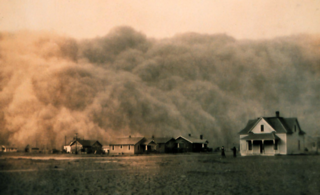
Dust-storm-Texas-1935  -  Dust Bowl

NOAA George E. Marsh Album    -    Public  Domain

*********************************************************************************************************

The Colorado River, The High Plains Aquifer And The Entire Western Half Of The U.S. Are Rapidly Drying Up


What is life going to look like as our precious water resources become increasingly strained and the western half of the United States becomes bone dry?  Scientists tell us that the 20th century was the wettest century in the western half of the country in 1000 years, and now things appear to be reverting to their normal historical patterns.  But we have built teeming cities in the desert such as Phoenix and Las Vegas that support millions of people.  Cities all over the Southwest continue to grow even as the Colorado River, Lake Mead and the High Plains Aquifer system run dry.  So what are we going to do when there isn’t enough water to irrigate our crops or run through our water systems?  Already we are seeing some ominous signs that Dust Bowl conditions are starting to return to the region.  In the past couple of years we have seen giant dust storms known as “haboobs” roll through Phoenix, and 6 of the 10 worst years for wildfires ever recorded in the United States have all come since the year 2000.  In fact, according to the Los Angeles Times, “the average number of fires larger than 1,000 acres in a year has nearly quadrupled in Arizona and Idaho and has doubled in every other Western state” since the 1970s.  But scientists are warning that they expect the western United States to become much drier than it is now.  What will the western half of the country look like once that happens?

A recent National Geographic article contained the following chilling statement…

The wet 20th century, the wettest of the past millennium, the century when Americans built an incredible civilization in the desert, is over.

Much of the western half of the country has historically been a desolate wasteland.  We were very blessed to enjoy very wet conditions for most of the last century, but now that era appears to be over.

To compensate, we are putting a tremendous burden on our fresh water resources.  In particular, the Colorado River is becoming increasingly strained.  Without the Colorado River, many of our largest cities simply would not be able to function.  The following is from a recent Stratfor article

The Colorado River provides water for irrigation of roughly 15 percent of the crops in the United States, including vegetables, fruits, cotton, alfalfa and hay. It also provides municipal water supplies for large cities, such as Phoenix, Tucson, Los Angeles, San Diego and Las Vegas, accounting for more than half of the water supply in many of these areas.

In particular, water levels in Lake Mead (which supplies most of the water for Las Vegas) have fallen dramatically over the past decade or so.  The following is an excerpt from an article posted on Smithsonian.com

And boaters still roar across Nevada and Arizona’s Lake Mead, 110 miles long and formed by the Hoover Dam. But at the lake’s edge they can see lines in the rock walls, distinct as bathtub rings, showing the water level far lower than it once was—some 130 feet lower, as it happens, since 2000. Water resource officials say some of the reservoirs fed by the river will never be full again.

Today, Lake Mead supplies approximately 85 percent of the water that Las Vegas uses, and since 1998 the water level in Lake Mead has dropped by about 5.6 trillion gallons.

So what happens if Lake Mead continues to dry up?

Well, the truth is that it would be a major disaster

Way before people run out of drinking water, something else happens: When Lake Mead falls below 1,050 feet, the Hoover Dam’s turbines shut down – less than four years from now, if the current trend holds – and in Vegas the lights start going out.

Ominously, these water woes are not confined to Las Vegas. Under contracts signed by President Obama in December 2011, Nevada gets only 23.37% of the electricity generated by the Hoover Dam. The other top recipients: Metropolitan Water District of Southern California (28.53%); state of Arizona (18.95%); city of Los Angeles (15.42%); and Southern California Edison (5.54%).


Read Full Article Here


**********************************************************************************************************


U.S. Has Depleted Two Lake Eries’ Worth Of Groundwater Since 1900

Aquifer water levels are rapidly falling across most of the U.S., according to a new study.
By Francie Diep Posted 05.21.2013 at 3:30 pm 8 Comments


Aquifers in the Continental US
Aquifers in the Continental US This map of major aquifers in the U.S. highlights the High Plains Aquifer (green) and the Dakota Aquifer (white, outlined in black). L.F. Konikow, U.S. Geological Survey

Over the last century, the U.S. has depleted enough of its underground freshwater supply to fill Lake Erie twice, according to a new study from the U.S. Geological Survey. Here’s another way to understand how much water we’ve used. Just between 2000 and 2008, the latest period in the study and the period of fastest depletion, Americans brought enough water aboveground to contribute to 2 percent of worldwide ocean level rise in that time.

“We think it’s serious,” Leonard Konikow, the U.S. Geological Survey hydrologist who performed the study, tells Popular Science. “It’s more serious in certain areas.”

Lowering aquifers mean less local water for the communities that depend upon them. They can also suck dry springs, wetlands and other surface water features, Konikow wrote in a report the survey published yesterday. Scientists don’t always have a tally for how much water an aquifer holds, however, so it’s more difficult to say what percentage of the U.S.’ overall groundwater is gone. (In some systems, it’s difficult to determine where the bottom of the aquifer is, Konikow explains.)


Read Full Article Here

Read more…

Earth Watch Report  -  Epidemic Hazards

Image Source

….

Today Epidemic Hazard Colombia Municipality of Garzon , Garzon Damage level Details

….


….

Epidemic Hazard in Colombia on Thursday, 23 May, 2013 at 02:41 (02:41 AM) UTC.

Description
An epidemic of acute respiratory infection (ARI) in the municipality of Garzon in the center of the Department of Huila has resulted in 2 deaths and another 23 people infected with the dangerous illness. Carlos Daniel Mazabel, departmental secretary for health, warned that pregnant women, people older than 60 years, and cancer patients are the most vulnerable groups. The 2 fatal victims to date are a 61-year-old woman and a 52-year-old man, a community leader from the municipality of Garzon, who, according to the medical diagnosis, died after a complicated fever and respiratory distress syndrome.
Biohazard name: Acute respiratory illness
Biohazard level: 4/4 Hazardous
Biohazard desc.: Viruses and bacteria that cause severe to fatal disease in humans, and for which vaccines or other treatments are not available, such as Bolivian and Argentine hemorrhagic fevers, H5N1(bird flu), Dengue hemorrhagic fever, Marburg virus, Ebola virus, hantaviruses, Lassa fever, Crimean-Congo hemorrhagic fever, and other hemorrhagic or unidentified diseases. When dealing with biological hazards at this level the use of a Hazmat suit and a self-contained oxygen supply is mandatory. The entrance and exit of a Level Four biolab will contain multiple showers, a vacuum room, an ultraviolet light room, autonomous detection system, and other safety precautions designed to destroy all traces of the biohazard. Multiple airlocks are employed and are electronically secured to prevent both doors opening at the same time. All air and water service going to and coming from a Biosafety Level 4 (P4) lab will undergo similar decontamination procedures to eliminate the possibility of an accidental release.
Symptoms:
Status: confirmed

….


Acute respiratory infections: a review*

Abstract

Acute respiratory infections (ARI) constitute one of the principal causes of morbidity and mortality in many countries. Data from 88 countries in five continents, with a total population of nearly 1200 million, showed that deaths due to ARI in 1972 amounted to 666 000. Pneumonia, both viral and bacterial, accounted for 75.5% of the total deaths from ARI. Mortality from ARI represents 6.3% of deaths from all causes. Considerable differences in mortality rates exist both between and within continents. Mortality from ARI is highest in infants and old people. The data suggest that in some areas of the world mortality due to ARI is extremely high.


Full Report  May Be Found Here

….


Read more…

Earth Watch Report  -  Biological Hazards

….

Today Biological Hazard USA State of Arizona, [Graham County] Damage level Details

….

….

Biological Hazard in USA on Thursday, 23 May, 2013 at 04:46 (04:46 AM) UTC.

Description
Authorities say a Graham County man has died of complications from the hantavirus, the first reported case of the disease this year. The Graham County Health Department says the 39-year-old man died earlier this month, but no additional information was immediately available Wednesday. The hantavirus is a rare disease that exhibits symptoms similar to the flu including fever, muscle aches and vomiting. Thirty-four cases of the virus have been recorded in Arizona since 2001. Of those, 38% were fatal. Health experts say there’s no specific treatment for the hantavirus and victims should seek medical attention as soon as they notice symptoms. Officials recommend sealing up any openings or crawl spaces around the household that could shelter unwanted rodents and placing traps in areas where rodent droppings have been detected.
Biohazard name: Hantavirus
Biohazard level: 4/4 Hazardous
Biohazard desc.: Viruses and bacteria that cause severe to fatal disease in humans, and for which vaccines or other treatments are not available, such as Bolivian and Argentine hemorrhagic fevers, H5N1(bird flu), Dengue hemorrhagic fever, Marburg virus, Ebola virus, hantaviruses, Lassa fever, Crimean-Congo hemorrhagic fever, and other hemorrhagic or unidentified diseases. When dealing with biological hazards at this level the use of a Hazmat suit and a self-contained oxygen supply is mandatory. The entrance and exit of a Level Four biolab will contain multiple showers, a vacuum room, an ultraviolet light room, autonomous detection system, and other safety precautions designed to destroy all traces of the biohazard. Multiple airlocks are employed and are electronically secured to prevent both doors opening at the same time. All air and water service going to and coming from a Biosafety Level 4 (P4) lab will undergo similar decontamination procedures to eliminate the possibility of an accidental release.
Symptoms: Hantaviruses are negative sense RNA viruses in the Bunyaviridae family. Humans may be infected with hantaviruses through urine, saliva or contact with rodent waste products. Some hantaviruses cause potentially fatal diseases in humans, such as hemorrhagic fever with renal syndrome (HFRS) and hantavirus pulmonary syndrome (HPS), but others have not been associated with known human disease.
Status: confirmed

….

….

Read more…

Earth Watch Report  -  Epidemic Hazards

Image Source

….

23.05.2013 Epidemic Hazard Tunisia Governorate of Monastir, Monastir Damage level Details

….


….

Epidemic Hazard in Tunisia on Monday, 20 May, 2013 at 17:38 (05:38 PM) UTC.

Back

Updated: Thursday, 23 May, 2013 at 03:27 UTC
Description
The World Health Organization (WHO) was notified by Tunisian health officials of two laboratory-confirmed cases of novel coronavirus (nCoV), or “Middle East Respiratory Syndrome Coronavirus” (MERS-CoV), according to a WHO update May 22. According to the WHO, the cases include a 34-year-old man and a 35-year-old woman that are siblings. The pair had mild respiratory illness and did not require hospitalization. Retrospective investigation into the cases revealed that the probable case, their father, 66 year old, became ill three days after returning from a visit to Qatar and Saudi Arabia on 3 May 2013. He was admitted to a hospital after developing acute respiratory disease. His condition deteriorated and he died on 10 May 2013. In addition, the Tunisia Health Ministry reports a probable case; however, initial laboratory tests conducted have been negative for nCoV.

….


….

Read more…

Earth Watch Report  -  Epidemic Hazards

Novel Coronavirus -  NCoV


A Saudi family arrives at a hospital in the center of the capital Riyadh, on May 14, 2013. A man who had contracted the coronavirus has died in Saudi Arabia, raising the death toll in the kingdom from the SARS-like virus to 17, the health ministry announced on its website on Wednesday


….

23.05.2013 Epidemic Hazard Saudi Arabia Eastern Province, Al-hasa Damage level Details

….

….

Epidemic Hazard in Saudi Arabia on Thursday, 02 May, 2013 at 07:12 (07:12 AM) UTC.

Back

Updated: Thursday, 23 May, 2013 at 03:27 UTC
Description
A man who had contracted the coronavirus has died in Saudi Arabia, raising the death toll in the kingdom from the SARS-like virus to 17, the health ministry announced on its website on Wednesday. “A male non-Saudi died on Tuesday in a hospital in the Qassim region where he had been admitted several days ago with acute bronchitis,” the ministry said. The ministry announced on Monday that a patient had died of coronavirus in the Eastern Region where most of the kingdom’s cases have been registered. But no new cases have been recorded in that region for five days, the ministry said. The latest death brings to 17 the number recorded in the kingdom. The ministry said most of those who had died were “elderly people with chronic illnesses”. Last week, the Geneva-based World Health Organisation reported that two Saudi health workers had contracted the deadly coronavirus from patients – the first evidence of transmission in a hospital setting. While the virus has been deadliest in Saudi Arabia, cases have also been reported in Jordan, Qatar, Germany, Britain and France.

….

….

SARS-like virus claims new life in Saudi


A man who had contracted the coronavirus has died in Saudi Arabia, raising the death toll in the kingdom from the SARS-like virus to 17, the health ministry announced on its website on Wednesday.


“A male non-Saudi died on Tuesday in a hospital in the Qassim region where he had been admitted several days ago with acute bronchitis,” the ministry said.


The ministry announced on Monday that a patient had died of coronavirus in the Eastern Region where most of the kingdom’s cases have been registered.


But no new cases have been recorded in that region for five days, the ministry said.


Read Full Article Here

….

Read more…

Epidemic Hazard – State of Alabama, Dothan [Southeast Alabama Medical Center] : U.S. and state health authorities are investigating an unidentified respiratory illness that has killed two of 10 people hospitalized with it in Alabama since last week UPDATE

Earth Watch Report  -  Epidemic Hazards

SAMC Front in SAMC Front Entrance by Southeast Alabama Medical Center


SAMC Tower

….

23.05.2013 Epidemic Hazard USA State of Alabama, Dothan [Southeast Alabama Medical Center] Damage level Details

….


….

Epidemic Hazard in USA on Wednesday, 22 May, 2013 at 03:30 (03:30 AM) UTC.

Back

Updated: Thursday, 23 May, 2013 at 03:24 UTC
Description
U.S. and state health authorities are investigating an unidentified respiratory illness that has killed two of 10 people hospitalized with it in Alabama since last week. Preliminary tests do not indicate the bird flu, nor a new mutation of any known influenza virus, said Dr. Mary McIntyre, an assistant state health officer at the Alabama Department of Public Health. Two patients did test positive for the H1N1 strain of the flu. Bacteria such as MRSA (Methicillin-resistant Staphylococcus Aureus) remains a possibility, especially as a secondary infection, McIntyre said on Wednesday. However, one patient tested for MRSA by a physician had negative results. “At this point, it could be anything. We are testing for everything,” McIntyre said. State health officials believe it is unlikely the patients are suffering from the new coronavirus that surfaced in the Middle East last year, because none had traveled, she said.

Laboratory samples were sent to the Centers for Disease Control and Prevention in Atlanta for evaluation, and the agency is expected to issue a report within 24 hours, she said. Those hospitalized with the illness had symptoms of fever, coughing, pneumonia and shortness of breath, health officials said. The first checked into a hospital last week, and the most recent patients were hospitalized on Wednesday. One person has been released, one is improving and the others are still suffering from their initial symptoms, according to McIntyre. The patients range in age from the 20s to late 80s and all lived in the Dothan, Alabama, area, but they were spread out around the community with no epidemiological link, McIntyre said. “Right now, we are not finding a connection…such as a place of work, a restaurant where they all ate, or a meeting they all attended,” she said. People with similar symptoms are encouraged to stay home and call their physician, health officials said.

….


….

....

Alabama mystery illness determined to be flu, cold or pneumonia

File:Pathologist with microscope.jpg

Image Source


Seven Alabama residents sickened by a mysterious illness this month that resulted in two deaths actually had cases of the flu, a cold virus or pneumonia, state health officials announced Thursday.


State and local authorities had been conducting laboratory tests from samples taken from the seven patients in conjunction with the Centers for Disease Control and Prevention (CDC). The lab samples revealed a combination of influenza A, rhinovirus (the virus associated with the common cold), and bacterial pneumonia.


The news assuaged fears that the illnesses were caused by viruses that are behind recent overseas outbreaks.


“This is good news,” state health officer Dr. Don Williamson said in a press release. “Testing has ruled out avian flu and novel coronavirus.”


A bird flu outbreak has sickened at least 131 people this year, mostly in China, and resulted in 26 deaths. Forty-four patients in the Middle East and Europe have been infected with a deadly respiratory infection since September 2012 that is a new type of coronavirus, a family of viruses that range from the common cold to deadly SARS. Twenty-two people have died, the World Health Organization said Thursday.


All seven Alabama patients were tested and six of the samples came back positive for either influenza A, rhinovirus or a combination of the two. Three patients were found to have bacterial pneumonia.

Read more…

Blog Topics by Tags

Monthly Archives