![]()
A standard representation of the last glacial maxim
NOTE: I just pasted this from my site which is in its infancy - and it is an ongoing article that even now in this stage needs to be more clearly defined and arranged. I recently got back from the family cottage near Peggy's Cove, Nova Scotia - so i will be doing a write-up for my page @ paradigmrevolutions.ning.com and I will post it here to, regarding evidence for displaced water via the miles of erratic boulders found there (with photo's I took). A few days ago I noticed that someone had mentioned chevrons to Nancy's ZT chat, which obviously they read through my stuff on either my page or a forum I have been posting on. I reference that ZT at the bottom, but to be sure, like a lot of folks here, I have had past troubles with her and the mods at the PS ning. Regardless of that and I hold no grudges, at all, I found it to be an interesting statement. Chevrons themselves are something I come upon within the last two weeks, and I have been reading geology journal articles, taking photo's on google earth etc...to me, it is a 'smoking gun' for the movement of the crust.
------------------------------------------------------------------------------------------------------------------------------------------------------
The Highly Important and Influential Book, Earth in Upheaval by Immanuel Velikovsky can be read Here
The Myth of the Ice Age and the Logic of Crust Displacement
By Preston Birch
"So the language of Science became the object of Science, and what had begun as perception unmediated by concepts became conception unmediated by percepts" -S. Tyler
In the above quote, anthropologist Stephen A Tyler shares some great wisdom. Essentially, as Science became more compartmentalized, politicised, and attuned to the modern Academic system of grant promises and dreams of Scientific Fame - Scientific writing, peer reviewed journals, became an arena who's war was waged under the guise of rhetoric. Increasingly, people had to talk the walk - the politics of the system became it's main focus. So, what had begun as viewing the natural world, studying and formulating hypothesis which leads to conceptions (understanding), became controlled, pre-disposed understandings of the world instead. Essentially, science produced a paradigm in which most Scientists saw what they viewed instead of viewing what they saw.
So what of the Ice Age theory, and its genesis?
As poor of a source as it is, I will quote Wikipedia for a standard definition of the Ice Age:
An ice age, or more precisely, a glacial age, is a period of long-term reduction in the temperatureof the Earth's surface and atmosphere, resulting in the presence or expansion of continental ice sheets, polar ice sheets and alpine glaciers. Within a long-term ice age, individual pulses of cold climate are termed "glacial periods" (or alternatively "glacials" or "glaciations" or colloquially as "ice age"), and intermittent warm periods are called "interglacials". Glaciologically, ice age implies the presence of extensive ice sheets in the northern and southern hemispheres.[1] By this definition, we are still in the ice age that began 2.6 million years ago at the start of the Pleistocene epoch, because the Greenland and Antarctic ice sheets still exist.[2]
Conventional Ice Age theory looks out into the world and sees Ice at our polar caps, evidence of ice carved landscapes around the globe and assumes the current caps must have stretched out far closer to the equatorial bulge. This assumption then has to explain cooling and warming of the earth, all of which are generalized theories based off one simple underlying value; The Doctrine of Uniformity.
Contextual History and Underlying Values
The idea of Uniformity can be said to have its birth out of the Chaos that reigned in Europe throughout the 18th and 19th Centuries. The French Revolution had sparked social upheaval. Lamarck, famous for his idea that Girrafes developed elongated necks because of stretching them over generations to reach tree tops - was a strong proponent of this idea. At the time, the Natural Sciences were coming into fruition, and as a reaction against the prevailing paradigm of the day - that of the Church and Catastrophism - Larmarck, Lyell and later Darwin took on this perspective to explain all natural phenomenon. Uniformity was born out of Chaos.
Uniformity implies that operations that are in existence in the natural world today, have always been so. We see the slow ebb and flow of earth changes, and we assume it was always like this. What has always interested myself, is the underlying reasons for why groups of people believe what they do, and more specifically why they are completely unaware of why they believe. Paradigm became engrained into the minds of its students through the unconscious patterning of human behaviour. But how does this come about?
All cultural phenomena are victim to specific contextual paradigms which acts as a knowledge-filter when viewing reality. This means that the overall worldview of the place we are born into, plays a major factor in the way we understand the world around us, not only be supplying us with language, customs, and presuppositions, but by acting as a blocking mechanism when other versions of reality attempt to stream in.
Examples of value-laden models come from all across the sciences. In anthropology, this illustrated quite well in an article by Mason on Goldman’s famous ethnography of the Cubeo in South America. Goldman views the Cubeo world view as permeating with sexual conceptions which manifest in symbolic ritualistic social action (Mason 2000: 232). Mason goes on to highlight some of the evidences that Goldman gives, to bring back the point that it is representative of sexuality. However, Mason takes another approach to this scenario, in that he decides to attach more credit to the Cubeo themselves, in showing the consciousness of their own sociality through the use of their own language (instead of showing the unconsciousness of their own sociality through our own language). Through discussing the various rituals of the Cubeo when a member of the group dies, Mason goes on to show that “Goldman’s focus on a steadily mounting sexual rhythm ignores these counter-points of humans and Ancients weeping, of the spider’s dance, and of the Aracu and Sloth dance.” (Mason: 239). The idea here of course, is that Goldman’s initial model allowed for him to filter out information, making way for a self-fulfilling prophecy.
Another example, which I will reference more thoroughly later - are two case studies done in the last twenty years regarding behavorial traits in meerkats. These small mammals will stand up on their hind legs when predators approach, the first study done saw this act as ![]() selfishness on the part of the mammal, because this would give that particular meerkat more time to escape any predatory encounters over his or her animal counterparts. The second study, saw the standing of the hind legs as altruistic behavior, warning its pact of incoming danger. The point to make here, is that both studies were conducted at the same external phenomenon (meerkats) however both yielded drastically different underlying theories to explain the behavior. How can this be so? Simple, because we attach our own underlying values, our own cultural baggage on to the external realm. And we do this through language, real time utterances and the written word, which is then studied and understood by other generations of people and each subsaquent time the language becomes more infused with layers of unconscious meaning.
Human beings are born into a society that provides them with a language. This lexicon is the result of thousands of minor mutations in older phrases (Rorty 1989: 16) that were itself the result of the same historical phenomenon. Language on the subsurface is but the tip of the iceberg, it is representative of a collection of meanings on top of meanings, layers or stratums (Foucault 1970) of historically implanted perceptions that over time lose their collectively agreed upon meaning. Therefore, this allows for an eventual shift from one perception of reality to another, through the attached meanings implanted onto words and phrases. When we loose these tendencies, we loose the way to view a reality from that angle (Rorty: 6). Below the iceberg is the history that has structured how we organize reality into certain ways (Foucault 1970), it is where the historical meanings have molded and transformed expressions, it is how we make sense of the world (Whorf 1988: 151)
"The Habitus, a product of history, produces invidividual and collective practices - more history - in accordance with the schemes generated by history. It ensures the active presence of past experiences which, deposited in each organism in the form of schemes of perception, thought and action, tend to garuntee the 'correctness' of practices and their consistency over time, more reliably then all formal rules or explicit norms" (Bourdieu: 54, 1992)
What the brilliant Bourdieu is saying here is quite simple: The Habitus (a set of unconscious rules that govern our behavior, thoughts, language, actions) is a product of specific people in specific times who agree on certain ways the world works. This produces sets of people who further the paradigm, and all its latent rules, through the very act of practicing these unconsciously installed axioms over time. This then creates, over generations of practioners within the paradigm - a set way to view the world, and it regulates the underlying values through the very simple act of Living within the active agents who practice it. Thus, concepts such as Uniformity can become engrained into the students mind, so engrained they do not even realise it, over generations of being absorbed into the various language sets and cognitive schemes produced.
It might surprise one to know that the initial genesis of the Ice Age Theory, by a man named Agassiz, understood it to be the cause of Cataclysmic activities upon the Earth. Velikovsky writes
"Agassiz regarded the inception and termination of the Ice Age as catastrophic events. He believed that mammoths in Siberia were suddenly caught in the ice that spread swiftly over the larger part of the globe. He expressed the belief that repeated global catastrophes were accompanied by a fall in the temperature of the globe and its atmosphere, and that glacial ages, of which the earth experienced more than one, were terminated each time by renewed igneous activity in the interior of the earth. This he maintained that the western Alps had risen very recently, at the end of the last Ice Age, and were younger than the carcasses of mammoths in SIberia, the flesh of which is still edible: these animals, he thought, had been killed at the beginning of the Ice Age. With the renewal of igenous activity, the ice cover melted, great floods ensued, the mountains and lakes in Switzerland and in many other places were formed, and the relief map of the world was generally changed." (Velkovsky: 33-34, 1955)
The creators of the Ice-Age theory, along with the famous Charles Lyell, were what we would today call "Armchair scholars". They concluded the existence of Ice-age theory without ever leaving their backyards.
Lyell himself found Agassiz's idea of ice cover to be wholly acceptable, though he saw it from a more Uniformitarian perspective. Lyell saw what looked like catastrophic changes in stratigraphic layers, dealing with fossils and the like - but assumed the infancy of the Doctrine is just merely incomplete - that we will fill in the gaps.
Velikovsky goes quotes Lyell:
"It has been truely observed that when we arrange the known fossiliferious formations in chronological order, they constitute a broken and defective series...we pass, without any intermediate gradiations from systems of strat which are horizontal, to other systems which are highly inclined -- from rocks of peculiar mineral composition to others which have a character wholly distinct---from one assemblage of organic remains to another, in which frequently nearly all the species, and a large part of the genera, are different. These violations (of uniformity) of continuity are so common as to constitute in most regions the rule rather than the exception, and they have been considered by many geologists as conclusive in favour of sudden revolutions in the inanimate and animate world" (Velikovsky:23, 1955).
Though his research showed otherwise, he still maintained the rising Uniformitarian view was wholly correct. He used statistical analysis from census reports (ibid), to show how changes in populations are gradual over a few generations. This was enough evidence then to solidify Uniformity as Science fact and to this day, all major disciplines operate over this paradigm, whether they realise it or not.
Problems of Uniformity according to Velikovsky
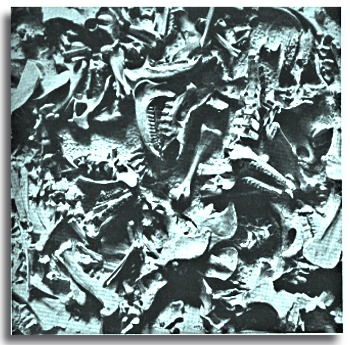
![]()
The hippopotamus, a familiar image in everyone's mind. A large mammal roaming the lands of the lush and fertile regions of Africa. Remnants of this beast have been discovered throughout much of Europe (ibid: 26). How is this explained? Migrating herds of Hippopotamus, traversing the waters to the northern areas was one such example. Does this not directly contradict Uniformity? Have we ever actually witnessed this today? Hippopotamus do not swim to Europe.
Velikosvky, again writes:
In northern Wales in the Vale of Clwyd, in numerous caves remains of hippopatmus lay together with those of the mammoth, the rhinoceros , and the cave lion. In the cave of the Cae Gywn in the Vale of Clwyd, "during the excavations it became clear that the bones had been greatly disturbed by water action." The floor of the cavern was "covered afterwards by clays and sand containing foreign pebbles. This seemed to prove that the caverns, now 400 feet above sea level, must have been submerged subsequently to their occuption by the animals and by man...The contents of the cavern must have been dispersed by marine action during the great submergence in mid-glacial times, and afterwards covered by marine sands..." writes H. B. Woodward.
Hippopotomi not only travelled during the summer nights to England and Wales, but also climbed hills to die peacefully among other animals in the caves, and the ice, approaching softly, tenderly spread little pebbles over the travellers resting in peace, and the land with its hills and caverns in a slow lullaby movement sank below the level of the sea and gentle streams caressed the dead bodies and covered them with rosy sand" (Velkovsky:27, 1955)
Icebergs and erratic boulders, another hot subject during the genesis of the Doctrine of Uniformity. How to explain this as a gradual, slow process? Lyell argued that giant boulders merely break off from Icebergs and over time, melt and deposit these giant stones in odd places, sometimes in such a way that an onlooker might think they could push one off a ledge with ease.
"Erratic boulders are found far from the seashore: Lyell taught that the land was submerged and icebergs travelling over it dropped their load of stones on it. Erratic boulders are found on the mountains; therefore, these mountains were under shallow water when icebergs carrying stones from other regions dropped them on the summits." (ibid:28).![]()
Again, we have observable phenomenon in the natural world, that to line up with Uniformity, the land must have been under water in our distant past. As Velikovsky points out, many of the worlds erratic boulders are also found laying in patterned lines, much like rocks on a beach due to wave action. We find erratic boulders the world over, and in the tropics is one such place that distresses the believer in uniformity. To explain this, the southern pole must have stretched so far north to have caused the polished surfaces, erratic boulders and other signs of ice cover. These explanations, though popularized in mainstream science to this day - then require another explanation as to why the Earth could have been so cold to cause this. What about all the other animal life? Vegetation?
In all of these occurrences, the Geologist needs to bring in more explanations so everything lines up with Uniformity.
"Bones of Greenland reindeer have been found in southern New Jersey and southern France, and bones of Lapland reindeer in the Crimea. This was explained as due to the invasion of ice and the retreat of the northern animals to the south. The hippopotamus was found in France and England and the Lion in Alaska. To explain similar occurrences, an interglacial period was introduced into the scheme: the land was warmed up and the southern animals visited the northern latitudes. And since the change from one fauna to another took place repeatedly, four glacial periods with three interglacial were generally counted, though the number of periods is not consistent with all lands or with all investigators.
But why the polar lands were not glaciated during the Ice Age was never explained. Greenland presents still another enigma in the preceeding formations, those of the Teriary Age. In the 1860's, O. Heer of Zurich published his classical work on the fossil plants of the Arctic; he identified the plant remains of the northern parts of Greenland as magnolia and fig trees, among other species. Forests of exotic trees and groves of juicy suptropical plants grew in the land that lies deep in the cold Arctic and is immersed yearly in a continuous polar night of six months' duration." (ibid:39-40).
So, to explain animate and inanimate carvings on the Earths surface, Uniformity has to introduce the Ice Age theory, suggesting that the current poles stretched far into the sub-tropical regions. And yet, at that time the poles itself housed lush greenlands. To explain the remains of animals and plants in glaciated areas, Uniformity has to introduce warming periods where animals move, then re-introduce cooling periods where they died and were submerged and or covered in ice again. Then they have to explain why the earth suddenly heated and cooled, was it the sun? Other galactic activities? Meteors? Snowball Earth?
Corals in the polar regions, whales and other marine deposits in the mountains...the list goes on.
It is like someone having to create another lie to cover a long list of lies.
Forests On The Poles

ScienceDaily (Aug. 1, 2012) — Given the predicted rise in global temperatures in the coming decades, climate scientists are particularly interested in warm periods that occurred in the geological past. Knowledge of past episodes of global warmth can be used to better understand the relationship between climate change, variations in atmospheric carbon dioxide and the reaction of Earth’s biosphere. An international team led by scientists from the Goethe University and the Biodiversity and Climate Research Centre in Frankfurt, Germany, has discovered an intense warming phase around 52 million years ago in drill cores obtained from the seafloor near Antarctica — a region that is especially important in climate research.
The study published in the journalNature shows that tropical vegetation, including palms and relatives of today’s tropical Baobab trees, was growing on the coast of Antarctica 52 million years ago. These results highlight the extreme contrast between modern and past climatic conditions on Antarctica and the extent of global warmth during periods of elevated atmospheric carbon dioxide levels.
Around 52 million years ago, the concentration of the greenhouse gas carbon dioxide (CO2) in the atmosphere was more than twice as high as today. “If the current CO2emissions continue unabated due to the burning of fossil fuels, CO2concentrations in the atmosphere, as they existed in the distant past, are likely to be achieved within a few hundred years”, explains Prof. Jörg Pross, a paleoclimatologist at the Goethe University and member of the Biodiversity and Climate Research Centre (BiK-F) in Frankfurt, Germany. “By studying naturally occurring climate warming periods in the geological past, our knowledge of the mechanisms and processes in the climate system increases. This contributes enormously to improving our understanding of current human-induced global warming.”
MORE
A few inherent problems exist with this model.
1. More evidence discovered that Antarctica was in a sub-tropical location, so how do we account for this? Geologists have to increase the global temperature of the Earth. With no causal explanation.
2. The study was done to better understand current global CO2 emissions, suggesting that if we continue on our current path - the Earth itself could undergo similar scenarios as to what occurred 52 million years ago.
3. Geological study is carried out under the assumption that the present day laws of nature have always been occurring - and yet, the inherent contradiction is that we do not see this phenomenon in play within the natural world today.
4. To provide answers to sub tropical life in Antarctica, either the earth was warmed to such an extent that the current poles could house this life - and if this is the case, where did all the water go? Would not the land masses be covered in water? If not, then Humans must have caused the CO2 emissions 52 million years ago which I think is highly unlikely.
Earth Crustal displacement can offer a better answer, without bringing in multiple causal explanations.
The portion of land in Antarctica where we find tropical forests must have been in a warmer lattitude then it previously is.
Here is a snippet from another article on the Arctic.
Scientist Probes Fossil Oddity: Giant Redwoods near North Pole
Once upon a time, Axel Heiberg Island was a very strange place.
Located in the Arctic Circle north of Canada, a full 8/9ths of the way from the equator to the North Pole, the uninhabited Canadian island is far enough north to make Iceland look like a great spot for a winter getaway, and today there's not much to it beyond miles of rocks, ice, a few mosses, and many fossils.
The fossils tell of a different era, though, an odd time about 45 million years ago when Axel Heiberg, still as close to the North Pole as it is now, was covered in a forest of redwood-like trees known as metasequoias.
Hope Jahren, an assistant professor of earth and planetary sciences in the Krieger School of Arts and Sciences at The Johns Hopkins University, recently published results that partially demystified Axel Heiberg's vanished forests. Jahren and colleague Leo Sternberg of the University of Miami uncovered evidence that the Axel Heiberg's forests probably received equatorial water and warmth from a prehistoric weather pattern unlike anything in existence today.
Other challenging mysteries remain, including how a forest could develop given the sunlight it would receive on Axel Heiberg. Because of its closeness to the North Pole both now and in the time of the redwoods, Axel Heiberg spends four months of each year in continuous sunlight and four months of each year in continuous darkness.
"We don't have plants that can survive under those conditions today, let alone forests," Jahren says. "For a tree to endure four months of daylight is like you or I going without sleep for four months."
Through a grant from the Andrew Mellon Foundation, Jahren's research group has made three summer visits to Axel Heiberg, excavating hundreds of fossil metasequoias. The fossils are immaculately well-preserved.
"Some of this stuff looks about like driftwood on the beach, but it's 45 million years old," Jahren says. "These fossils are chemically preserved at a level you usually would expect to see in something that's only 1,000 years old." That's ideal for Jahren, who studies the presence of isotopes of elements like carbon, nitrogen and oxygen in living and fossilized plants. Isotopes are forms of an element that differ only by the addition of one or more subatomic particles known as neutrons. Different isotopes of the same element have different mass, which affects the way plants use them...
MORE
Notice the estimation here - 45 million years ago in the Arctic while Antarctica is 52 million years. So in a 7 million year period, must we then cause the Earth to warm up and cool down several more times? How? What cause?
Mountain Building
Currently, mainstream dogma states that mountains are the process of the slow ebb and flow of continental drift, the great ![]() chains around the world slowing being lifted and pushed as the plates push against one another. However, geologists are far to aware of many mountain chains that contain sharp rock, from newer strata that has been pushed up over older formations.
One such example, as is quoted in Earth in Upheaval is the Chief Mountain located in the state of Montana. " It has been thrust bodily upon the much younger strata of the Great Plains, and then driven over them eastward, for a distance of at least eight miles. Indeed, the thrust may have been several times eight miles," writes Daly" (Velikovsky:65, 1955)![]()
Velikovsky continues: "By similar thrusting, the whole Rocky Mountain front, for hundreds of miles, has been pushed up and then out, many miles over the plains". Such titanic displacements of the mountains have been found in many places on the earth. The displacement of the Alps is extensive" (ibid:65)
Could it be that the mountains rose as late as in the age of man and carried up with them caverns of early man? In recent years evidence has grown rapidly to show, in contrast to previous opinions, that the Alps and other mountains rose and attained their present heights, and also travelled long distances, in the age of man"(ibid:68).
Without delving into the pages and pages of evidences regarding mountain building that Velikovsky presents in Earth and Upheaval I will simply move on to the possible cause of this. If the mainstream view of the Ice Age theory has to bring into account many many causal explanations, then what of this idea?
It really asks the reader to think of one explanation: Earth Crustal Displacement.
A More Logical Explanation?
This notion was first popularized by Professor Charles Hapgood, who upon stumbling into ancient maps that showed areas of the world that were thought to have not been mapped by ancient civilizations, as well, certain areas on showed land masses before ice cover - ala Antarctica.
To explain this, he had his students help him in his research - and he came up with the notion of Earth Crustal Displacement, which in his book Ancient Maps of the Seafaring Kings, attempted an explanation put forth by none other then Albert Einstein who wrote the forward to the book.
Hapgood and Einstein thought, that if we view the earth's outer layers as the crust of an orange peel, the mantle being the orange - then we could envision a sudden slippage of the crust around the core. This would send the current polar regions into warmer climates, and be a reasonable explanation for all of the above information.
Einstein thought this could have occurred due to ice build up on the polar regions. So say, the north pole had built up so much ice over thousands of years - that isostasy would occur - a heavier pole on one side would need to balance itself out, essentially causing to much weight and dragging the crust along with it.
Velikosvky again on the subject:
One after the other, the scenes of upheaval and devastation have presented themselves to explorers, and almost every new cave opened, mountain thrust explored, under sea canyon investigated, has consistently disclosed the same picture of violence and desolation. Under the weigh of this evidence two great theories of the nineteenth century have become more and more strained: the theory of uniformity and the theory of evolution built upon it. The other fundamental teaching originating in the nineteenth century ---the theory of ice ages --- has been loaded more and more heavily with the responsibility for the geological facts revealed; however, the cause of the ice ages remained a much-discussed and never-agreed-upon subject.
A true theory of the origin of ice ages, whether restoring to astronomical, geological, or atmospheric causes, must also explain why ice ages did not occur in north-easternSiberia, the coldest place on earth, but did occur in temperate latitudes, and in a much more remote past in India, Madagascar, and equatorial Brazil. None of the theories mentioned explains these strange facts. Hypotheses concerning warmer and colder areas in space, or the variability of the sun as a source of energy, are especially inadequate to account for the geographical distribution of the ice cover. Thus the concept of the ice ages, which is established in science as one of its most definite facts, serving also as a foundation for the theory of evolution, has no explanation itself.
All other theories of the origin of the Ice Age having failed, there remained an avenue of approach which already early in the discussion was chosen by several geologists: a shift of the terrestrial poles. If for some reason the poles had moved from their original positions, old polar ice would have moved out of the Arctic and Ant-arctic circles and into new regions. The glacial cover of the Ice Age could been the polar icecap of an earlier epoch. Thus would be explained not only the origin of the ice cover but also the fact that its geographical position did not coincide with the present Polar Circles"
Not only would a shifting of the actual crust explain the myriad of geological phenomenon, but it would help give testimony to cultural text and lore throughout the world. A shifting of the Earth's crust would cause the ocean waters to slosh, flooding inland and washing up sea creatures, rocks and debris - pummelling them into caves.
Japans' March Tsunami, Debris, and Velikovsky